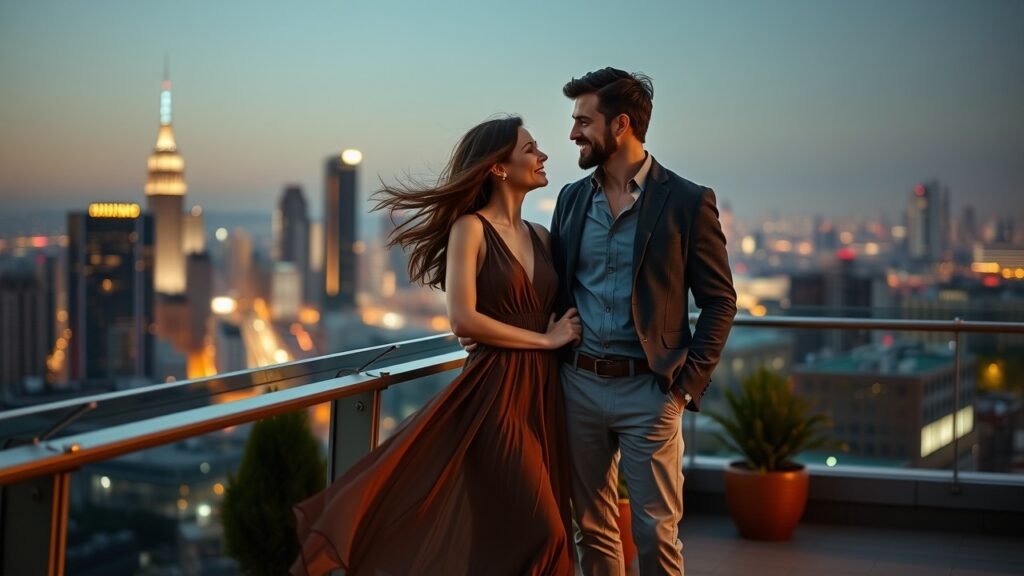
The Performance of the “Perfect” Pair
We’ve stopped dating people and started dating profiles. It’s a subtle shift, but it’s lethal. When you meet someone now, you don’t just meet them. You meet the curated, filtered, highly-produced version of who they want the world to think they are. You see the vacation photos, the gym selfies, the witty captions. You don’t see the morning breath, the existential dread at 3 AM, or the way they treat waitstaff when they’re having a bad day.
This creates a massive gap between expectation and reality. You fall in love with a highlight reel, and then you’re disappointed when the actual human being shows up with flaws and baggage. It’s a psychological bait-and-switch. Your brain is wired to seek patterns, and when the pattern of the “perfect partner” on Instagram doesn’t match the person sitting in front of you, your nervous system starts sending out alarm bells. You feel cheated. You feel like the person lied to you, even if they were just trying to fit in.
This performance isn’t just for the singles. Couples do it too. I’ve coached couples who are on the brink of divorce, who haven’t touched each other in months, yet their Instagram feed is a testament to eternal bliss. “My forever person,” the caption says, while they’re sleeping in separate rooms. It’s a form of collective gaslighting. We see these images and compare our messy, complicated, “boring” lives to them, and we feel like we’re failing. But you aren’t failing. You’re just living a real life in a world obsessed with fiction.
The Anxiety of the “Seen” Receipt
Let’s talk about the specific hell that is the “Read” receipt. Or the “Active Now” status. It’s a playground for the anxious-attached. You send a text. It’s a vulnerable one. Maybe you’re asking for a second date, or maybe you’re just saying you had a good time. You see those two little blue checks. You see that they’re online. And then… nothing.
The silence isn’t just silence; it’s a scream. Your brain starts inventing scenarios. They’re bored of me. They’re talking to someone else. I said something stupid. I’m too much. I’m not enough. This isn’t just “dating jitters.” This is a full-blown nervous system hijack. Your body goes into a fight-or-flight response over a digital ghost. We weren’t built for this kind of constant, low-grade surveillance of our romantic interests. It creates a state of hyper-vigilance that makes it impossible to actually relax and be yourself.
For many, this digital tracking becomes an addiction. You check their stories to see if they’ve viewed yours. You check their following list to see if it’s gone up by one. It’s a hunt for certainty in an inherently uncertain world. But certainty is an illusion. You can know exactly when they were last on WhatsApp and still have no idea what’s going on in their heart. When you’re stuck in this loop, dating with anxiety tips for staying calm become less of a suggestion and more of a survival manual for your sanity.
Related: How to Spot an Emotionally Unavailable Partner
Sometimes the “performance” on social media is a shield. People who are terrified of real intimacy often hide behind a perfectly crafted digital persona. If they seem too good to be true online but can’t hold a deep conversation in person, you might be looking at someone who isn’t ready to let anyone in.Learn the warning signs of emotional unavailability.
The Illusion of Infinite Choice
The “Paradox of Choice” is a real bitch. Back in the day, you dated the people in your town, your church, or your office. You had maybe five options. Now? You have five thousand. They’re all just a swipe away. This creates a “grass is greener” mentality that makes it nearly impossible to commit.
Why work through a difficult conversation with the person you’re with when you can just open an app and find someone new who hasn’t annoyed you yet? We’ve commodified humans. We’ve turned people into products that can be returned if they don’t meet our exact specifications.
But here’s the thing: everyone is going to annoy you eventually. Everyone has baggage. Everyone has a “weird” thing. By constantly looking for the “better” option, we miss out on the depth that only comes from staying. We’ve traded intimacy for variety, and it’s making us miserable. We’re like kids in a candy store who can’t decide what to buy, so we just end up with a stomachache and nothing to show for it.
The Safety of the Screen
We use our phones as shields. It’s easier to sext than to have a conversation about what you actually want in bed. It’s easier to break up via text than to look someone in the eye and watch their heart break. We’re losing the ability to handle the “heat” of real human emotion.
When you’re behind a screen, you’re in control. You can edit your words. You can wait three hours to respond. You can hide your shaking hands. But intimacy—real, gritty, soul-level intimacy—requires you to lose control. It requires you to be seen in your mess. You can’t filter a face-to-face rejection. You can’t “undo” a clumsy first kiss.
The more we rely on digital interaction, the more we atrophy our emotional muscles. We become “socially anxious” not because we’re broken, but because we’re out of practice. We’ve forgotten how to read body language, how to hold a silence, how to sit with the discomfort of not knowing what happens next. Understanding how to date safely in the digital age is as much about protecting your heart from these habits as it is about protecting your physical safety.
Related: Dealing with Dating Burnout: When to Take a Break
The constant cycle of swiping, chatting, and being disappointed is exhausting. It drains your empathy and turns dating into a chore. If you find yourself hating everyone you meet before you even say hello, it’s time to step back and recharge.Read about how to handle dating exhaustion.
The Death of Mystery and the Birth of Stalking
Remember when you used to have to actually ask someone questions to find out who they were? Now, we do a full FBI-level background check before the first drink is poured. We know where they went to college, what their ex looks like, and that they went to a Coldplay concert in 2017.
We think this information makes us safer. We think it gives us a head start. But it actually ruins the discovery. You go into a date with a preconceived notion of who they are based on a digital footprint that might be years old or completely misleading. You’ve already decided if they’re “your type” before they’ve even opened their mouth.
And then there’s the post-date stalking. Analyzing who they just followed. Seeing if they’ve updated their bio. It’s a form of self-torture. You’re looking for evidence that they’re moving on or that they never cared. It’s a way to avoid the actual pain of the situation by turning it into a detective game. But there are no winners in this game. Just two people staring at screens, feeling like shit.
The Vanishing Act: Why We Ghost
Ghosting is the ultimate byproduct of the digital age. It’s the easiest way to handle conflict: you just don’t. You block, you delete, you disappear. You treat a human being like a tab on a browser that you’re done with.
People who ghost often think they’re being “nice.” They think they’re “sparing” the other person’s feelings by not rejecting them outright. But it’s actually the most cruel thing you can do. It leaves the other person in a state of “ambiguous loss.” There is no closure. No explanation. Just a void where a person used to be.
This behavior is a symptom of a massive lack of accountability. When we meet people through an app, we don’t have shared social circles. We don’t have to worry about seeing them at the grocery store or a friend’s party. We can vanish with zero consequences. But there are consequences. Every time you ghost, you chip away at your own integrity. You make it a little harder for the next person to trust. You contribute to a culture of disposability that will eventually come back to haunt you. Learning how to handle ghosting with maturity and grace is a superpower in a world that’s forgotten how to say goodbye.
The Dopamine Trap of External Validation
We’ve outsourced our self-esteem to the algorithm. We feel good when the “likes” come in. We feel sexy when a stranger DMs us. We feel successful when we have a “power couple” photo to show off.
But this validation is hollow. It’s a hit of dopamine that lasts about thirty seconds before you need the next one. It’s not the same as the deep, nourishing feeling of being truly seen and appreciated by a partner. In fact, the more we seek external validation, the more we lose touch with our internal compass.
I’ve seen people stay in terrible, toxic relationships just because the “aesthetic” of the couple looked good on TikTok. They were miserable behind closed doors, but they couldn’t give up the “clout” that came with the relationship. They were addicted to the feedback of people who didn’t even know they were crying themselves to sleep.
Related: How to Manage Relationship Anxiety
Digital habits can turn a small insecurity into a full-blown crisis. If you find yourself spiraling every time your partner doesn’t like your photo or posts a story without you, it’s time to look at the underlying anxiety that’s driving the behavior.Learn how to stay grounded in your relationship.
Reclaiming the Real World
So, how do we fix it? Do we all throw our phones into the ocean and move to a commune? Tempting, but probably not practical.
The fix is smaller. It’s more personal. It’s about setting boundaries with yourself. It’s deciding that your dinner date’s face is more interesting than your feed. It’s having the courage to tell someone “I’m not interested” instead of just disappearing. It’s realizing that a “like” is not a conversation, and a “follow” is not a commitment.
We have to start valuing the “boring” parts of dating again. The awkward silences. The weird habits. The long, rambling stories that don’t have a punchline. We have to be willing to be seen without a filter. That’s where the magic is. Not in the ring light, but in the half-darkness of a real conversation where you’re both a little bit afraid and a little bit hopeful.
When you start looking for green flags: positive signs youve found a keeper, you’ll realize that the best ones aren’t digital. They’re the way someone listens when you’re talking. The way they show up when things are hard. The way they make you feel like you don’t need to perform anymore.
Love is messy. It’s complicated. It’s definitely not “aesthetic.” And that’s what makes it beautiful. Don’t let a five-inch screen trick you into thinking otherwise. Put the phone down. Look at the person in front of you. And for God’s sake, just be a human being.